


What is pulsation dampener
Shanghai Siken Industries Inc.
Web: www.siken-inc.com
Email:info@siken-inc.com
A pulsation dampener (also called a pulsation damper or pulse dampener) is a device installed in fluid systems—especially with positive displacement pumps—to reduce pressure and flow fluctuations (pulsations), vibration, noise, and hydraulic shock.
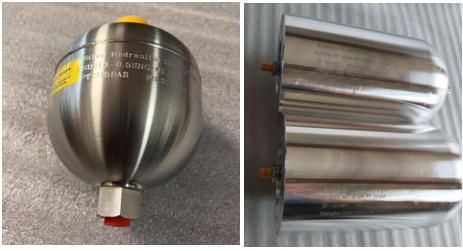
Why Pulsations Occur
Reciprocating or cyclic pumps (piston, plunger, diaphragm, AODD/air-operated double diaphragm, peristaltic, metering/dosing pumps, etc.) deliver fluid in discrete strokes rather than a continuous smooth flow. This creates a characteristic “sawtooth” pressure/flow pattern with peaks and troughs. Unchecked, these cause:
• Pipe vibration and fatigue
• Noise
• Premature wear of valves, seals, fittings, and instrumentation
• Inaccurate flow metering or dosing
• Potential water hammer or system damage
How It Works
Most modern pulsation dampeners use a compressible gas cushion (usually precharged nitrogen) separated from the process fluid by a flexible barrier (bladder, diaphragm, or sometimes a piston). They function much like a hydraulic shock absorber or a specialized accumulator:
1. During a pressure spike (pump discharge stroke), fluid enters the dampener and compresses the gas, absorbing excess energy.
2. During a pressure drop (between strokes), the gas expands and pushes fluid back into the line, filling the trough.
The result is a much smoother, more continuous flow and pressure profile.
Proper precharge pressure is critical (typically set relative to the system’s operating pressure range) for effective damping.
Common Types
• Bladder-type — Flexible elastomer bladder filled with nitrogen; excellent response and widely used.
• Diaphragm-type — Flexible diaphragm separates gas and fluid; good for corrosive or sanitary applications where fluid must not contact the gas.
• Piston-type — Uses a floating piston; more common in higher-pressure hydraulic systems.
• Active vs. passive — Passive units rely on a fixed precharge; active units (often used with AODD pumps) dynamically adjust using compressed air tied to the pump’s air supply for better performance across varying conditions.
• Inline or tee-mounted designs; some specialized versions for suction-side stabilization as well.
Many pulsation dampeners are essentially hydraulic accumulators (bladder, diaphragm, or piston) optimized and sized specifically for high-frequency pulsation absorption rather than bulk energy storage.
Benefits
• Significantly reduces pressure pulsations (often by 80–99% when properly sized and installed)
• Lowers vibration, noise, and pipe stress
• Extends service life of pumps, seals, valves, and piping
• Improves flow meter accuracy and dosing/process consistency
• Can allow smaller pipe diameters in some cases
• Protects against water hammer and surges
Typical Applications
• Discharge (and sometimes suction) lines of reciprocating, diaphragm, and metering pumps
• Chemical dosing and process systems
• High-pressure cleaning, water treatment, oil & gas (e.g., mud pumps), petrochemical, and industrial hydraulics
• Any system where smooth flow and reduced vibration are required
Installation Notes
Dampeners are most effective when mounted as close as possible to the pump discharge (ideally with the port aligned to the flow). Correct sizing based on pump displacement, speed, pressure, and desired residual pulsation level is essential. Materials must be compatible with the fluid and operating conditions.